♥ MEET THE LWA SERIES AT ERZULIE’S VOODOO – VODOU LWA: AZAKA
♥ PRACTITIONER-LED INSIGHTS INTO THE SPIRITS OF HAITIAN VODOU!
Welcome to our Meet the Lwa series. Each page offers a brief overview of the Lwa’s origins, attributes, and ceremonial roles—designed for spiritual students, researchers, and practitioners seeking clarity and context.
These teachings were passed down to me by my elder Mambos, spiritual godparents, and our beloved Hougan Aboudja, in collaboration with Hougan Jour Mwen Lonje, whose lifelong service and deep initiatory knowledge continue to guide our work.
As the founder and Vodou practitioner of Erzulie’s Voodoo New Orleans, I created this archive to share the foundational aspects of each spirit with respect, accuracy (from our Vodou house’s perspective), and spiritual devotion. Every detail—from Veve symbols to ritual offerings—has been curated to reflect the integrity of our tradition and the legacy of those who came before us.
♥ Azaka: Minister of Agriculture & Earth’s Guardian
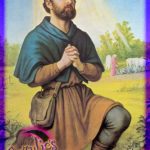
Azaka is a beloved lwa of the earth and its cultivation. Known as the Minister of Agriculture, he collaborates with Sobo and Bade—the Rain and the Wind—to bring fertility, nourishment, and opportunity to those who serve him. Often called “cousin” (kouzen) by devotees, Azaka is a shy, rural spirit who distrusts authority but brings work and abundance to the faithful.
♥ Symbols & Attributes
Straw satchel (djakout or alfort), kouto digo (pruning knife), and a backed clay pipe (katchimbo).
Azaka, the Haitian Vodou Lwa of farming, labor, and humility—honored by practitioners at Erzulie’s Voodoo New Orleans as part of our educational archive on Vodou spirits and traditions.
♥ MEET THE LWA SERIES AT ERZULIE’S VOODOO – VODOU LWA: AYIZAN
♥ PRACTITIONER-LED INSIGHTS INTO THE SPIRITS OF HAITIAN VODOU!
Welcome to our Meet the Lwa series. Each page offers a brief overview of the Lwa’s origins, attributes, and ceremonial roles—designed for spiritual students, researchers, and practitioners seeking clarity and context.
These teachings were passed down to me by my elder Mambos, spiritual godparents, and our beloved Hougan Aboudja, in collaboration with Hougan Jour Mwen Lonje, whose lifelong service and deep initiatory knowledge continue to guide our work.
As the founder and Vodou practitioner of Erzulie’s Voodoo New Orleans, I created this archive to share the foundational aspects of each spirit with respect, accuracy (from our Vodou house’s perspective), and spiritual devotion. Every detail—from Veve symbols to ritual offerings—has been curated to reflect the integrity of our tradition and the legacy of those who came before us.
♥ Ayizan: First Priestess, Cleanser & Market Protector
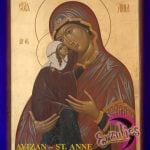
Ayizan is the first priestess (manbo) and mother of priests in Haitian Vodou. She presides over initiation rites and the boule zen ceremony (the ritual of burying pots). A prophetess, exorciser, and spiritual cleanser, Ayizan is an androgynous mystery and wife to both Legba and Loko.
♥ Symbols & Attributes
Royal palm tree, palm frond, and the small grass snake (madelin).
Ayizan, the Haitian Vodou Lwa of initiation, marketplaces, and spiritual wisdom—honored by practitioners at Erzulie’s Voodoo New Orleans as part of our educational archive on Vodou spirits and traditions.
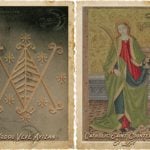
Vodou Spirits, Voodoo Lwa and the Voodoo Spirits Catholic Saint Counterparts in the Vodou Religion. Voodoo Spirit & Vodou Lwa Ayizan, the Priestess and the Catholic Saint Counterpart St. Lucy by Erzulie’s Voodoo in New Orleans.
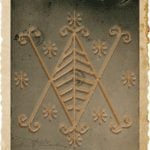
Voodoo Veves and Sacred Vodou Veve for Lwa Ayizan, Mother of the Priesthood in the Vodou Religion by Erzulie’s Voodoo in New Orleans.
♥ MEET THE LWA SERIES AT ERZULIE’S VOODOO – VODOU LWA: Agawou
♥ PRACTITIONER-LED INSIGHTS INTO THE SPIRITS OF HAITIAN VODOU!
Welcome to our Meet the Lwa series. Each page offers a brief overview of the Lwa’s origins, attributes, and ceremonial roles—designed for spiritual students, researchers, and practitioners seeking clarity and context.
These teachings were passed down to me by my elder Mambos, spiritual godparents, and our beloved Hougan Aboudja, in collaboration with Hougan Jour Mwen Lonje, whose lifelong service and deep initiatory knowledge continue to guide our work.
As the founder and Vodou practitioner of Erzulie’s Voodoo New Orleans, I created this archive to share the foundational aspects of each spirit with respect, accuracy (from our Vodou house’s perspective), and spiritual devotion. Every detail—from Veve symbols to ritual offerings—has been curated to reflect the integrity of our tradition and the legacy of those who came before us.
♥ Agawou: Thunderer, Healer & Winged Serpent
Agawou is one of the oldest mysteries in Haitian Vodou. A thunderer who walks with Sobo (rain), Bade (wind), and Kebyesou (lightning), Agawou is known for rare but powerful possessions. Revered as a prophet, healer, and houngan, this spirit embodies both force and wisdom.
♥ Symbols & Attributes
Lightning, thunder-stone, and koko makak—a short fighting stick made from Geonoma Oxycarpa wood.
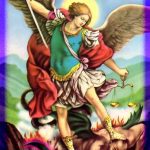
Agawou, the Haitian Vodou Lwa of naval command, discipline, and spiritual warfare—syncretized with Ogoun and St. Michael in some Vodou traditions. Honored by practitioners at Erzulie’s Voodoo New Orleans as part of our educational archive on Vodou spirits and traditions.
♥ MEET THE LWA SERIES at Erzulie’s Voodoo – Vodou Lwa: Agwe
♥ Practitioner-Led Insights into the Spirits of Haitian Vodou!
Welcome to our Meet the Lwaseries. Each page offers a brief overview of the Lwa’s origins, attributes, and ceremonial roles—designed for spiritual students, researchers, and practitioners seeking clarity and context.
These teachings were passed down to me by my elder Mambos, spiritual godparents, and our beloved Hougan Aboudja, in collaboration with Hougan Jour Mwen Lonje, whose lifelong service and deep initiatory knowledge continue to guide our work.
As the founder and Vodou practitioner of Erzulie’s Voodoo New Orleans, I created this archive to share the foundational aspects of each spirit with respect, accuracy (from our Vodou house’s perspective), and spiritual devotion. Every detail—from Veve symbols to ritual offerings—has been curated to reflect the integrity of our tradition and the legacy of those who came before us.
♥ AGWE – SOVEREIGN OF THE SEVEN SEAS
Commander of the cosmic navy and guardian of Zile Menfò.
Agwe is the Sovereign of the Seven Seas. Husband of Lasiren and lover of Ezili Freda. His kingdom is called Zile Menfò, located beneath the waves on the mythical Three Islands (Twa Ile).
♥ SYMBOLS & ATTRIBUTES
Sail boat or row boat
Hand paddle (“batwe”) with small mirror affixed
Conch shell
Agwe, the Haitian Vodou Lwa of the sea, ships, and cosmic order—syncretized with St. Ulrich in select Vodou lineages. Honored by practitioners at Erzulie’s Voodoo New Orleans as part of our educational archive on Vodou spirits and traditions.
Vodou Spirits, Voodoo Lwa and the Voodoo Spirits Catholic Saint Counterparts in the Vodou Religion. Voodoo Spirit & Vodou Lwa Agwe, Sovereign of the Sea and the Catholic Saint Counterpart St. Ulrich by Erzulie’s Voodoo in New Orleans.
Voodoo Veves and the Sacred Vodou Veve for Lwa Agwe, Sovereign of the Seas in the Vodou Religion by Erzulie’s Voodoo in New Orleans.
Introduction: African Divination Systems, Bone ReAdings & Vodou Priest Psychic Readings
African Divination Systems and Vodun Priest & Priestess Psychic Readings. Learn about African Divination Systems including Bone Readings, Shell Readings, Kola Nut Readings and Divinations from the African Traditional Religions (ATR). Divination is the sacred practice of seeking guidance, clarity, and messages from the spiritual realm. In African Traditional Religions (ATR), divination is often described as the Voice of God — a way for initiated Priests and Priestesses to interpret signs, symbols, and sacred objects to reveal insight into life’s questions.
At Erzulie’s Voodoo in New Orleans, our initiated Vodou and Santeria Priests and Priestesses use these powerful tools — bone readings, shell readings, kola nut divination, and more — in every psychic reading and spiritual consultation. These systems are not casual practices; they require years of training, spiritual attunement, and devotion to master.
This overview is part of our Spiritual Summary Series™, provided by Babalawo Manolo, one of my favorite Padrinos, and family members, straight outta Miami – and designed to acquaint you with the foundations of African divination systems and their role in authentic Vodou traditions.
♠ Why Initiation Matters in African Divination
African divination systems can only be performed by initiated practitioners of Vodou, Santeria, Ifa, Yoruba, Candomblé, Palo, and related traditions. Each path carries its own sacred methods, symbols, and initiations. Without initiation, the readings lack validity and accuracy, as true divination requires mastery of thousands of combinations, deep spiritual training, and communion with the Divine. Many of our initiated Vodou and Santeria Priests and Priestess use these tools, or a combination of these tools, in every psychic reading and spiritual consultation offered at Erzulie’s Voodoo in New Orleans.
Vodou Lwa, Voodoo Spirits and Catholic Saint Counterparts
The Vodou Lwa, Voodoo Spirits and their Catholic Saint counterparts. Who were the Vodou Lwa most closely syncretized to when they came to the new world in the New Orleans Voodoo tradition and in the Haitian Vodou religion?
This section serves as a basic primer of the Voodoo Spirits, the Vodou Lwa and their Catholic counterparts. These are the most common Catholic Saints traditionally associated with the Vodou spirits as found within the Haitian Vodou religion, New Orleans Voodoo traditions and other spiritual paths of the African traditional religions as represented at Erzulie’s Voodoo in New Orleans.
The Syncretism of Vodou Spirits in the New World
The following overview of the Voodoo spirits and their Catholic counterparts are not intended to replace the vast history or the culturally rich, and complex theology. Instead, this is to provide general foundational concepts as to which Catholic Saints the Vodou Lwa are most closely associated with due to the African diaspora (slave trade) and acquaint you with the power and beauty of the mysteries of Vodou. Continue reading “Vodou Lwa, Voodoo Spirits and Catholic Saint Counterparts”→
Roots of Vodou and Vodou Beliefs. More about the Vodou religion and the roots of Vodou. This section serves as a basic primer of the roots, concepts, and beliefs of Haitian Vodou and the other spiritual paths of the African traditional religions as represented at Erzulie’s Voodoo in New Orleans. The following overviews are not intended to replace the vast, culturally rich, and complex theology, but instead, to provide general foundational beliefs, dispel common myths, misnomers and acquaint you with the power and beauty of the mysteries of Vodou.
Voodoo prayers, Haitian Vodou proverbs and Vodou expressions ~ sacred words in the Vodou tradition. A fun collection of some of our favorite Voodoo prayers, expressions and Vodou proverbs as passed down from our elders. If you wish to learn more from an initiated Vodou practitioner about the Vodou religion, they are always available for a spiritual consultation.
♥ What Are Vodou Altars, Voodoo Shrines & How To CREATE SACRED SPACES
Creating Vodou altars, Voodoo shrines, and sacred spaces is not limited to initiated clergy. Anyone with a connection to the Voodoo spirits can create their own altar for private rituals or public ceremonies. This guide, prepared by Hougan Aboudja and the initiated practitioners at Erzulie’s Voodoo in New Orleans, offers foundational insights into building your sacred space with sincerity and respect.
♥Vodou Altars, Voodoo Shrines and Sacred Spaces:
Voodoo Altars can be created for private or public use. The most important element to creating a sacred space for any spirit is your sincerity and respect. “Vodou is the most tolerant religion because it doesn’t exclude anything,” said Edouard Duval-Carrie, a famous Haitian painter. “Vodou brings together the views of African slaves.” Our goal at Erzulie’s Voodoo was to create a material representation of Vodou beliefs and a comprehensive display of Haitian Vodou Altars, Sacred Spaces, and art styles from paintings to beaded flags (drapos).
♥ Essential Items for Your Voodoo Altar or Shrine:
For those not initiated into the Vodou, and who have no access to elders, you can create an altar to Spirit on a shelf or tabletop, in a cupboard or other niche. Here are some helpful tips as to setting up your sacred space in the Voodoo religion:
Place beautiful objects, Vodou dolls, talisman, statues, flowers, stones, or roots on the altar; choose those things, which hold a special meaning, or inspiration for you.
Voodoo Altar, Voodoo Shrine and Sacred Space to Erzulie-Freda, the Voodoo Spirit of Love, Romance and Passion, and perfect for Love Spells and Love Rituals. She is also the namesake of Erzulie’s Voodoo in New Orleans.
Make sure that you also place water on this altar for clarity and coolness in your life. Change it frequently.
Create the altar in honor of people, whether living or dead, who have inspired you in your life; certainly, their pictures may be placed there also.
The altar may be simple or complex and should be as beautiful as you like. Offer prayers to the Almighty.
Meditate before this altar daily concentrating on those things, those positive changes, you wish for in your life that might benefit you, your family, or your community.
Voodoo Altar, Voodoo Shrine and Sacred Space for Papa Legba. Papa Legba is the guardian of the crossroads, the road opener, divine messenger and opportunity maker in the Vodou religion, and a very honored Voodoo Lwa at Erzulie’s Voodoo in New Orleans.
Typically, individual devotees, even priests, maintain a small altar for the Lwa (or for a specific Lwa) in their homes as a focal point for prayer and meditation; here they make private devotionals, frequent services to their personal mysteries. Properly, these home altars are called ogantwa. On or in these ogantwa sit many of the same items found in the badji of the hounfò, including lithographs (or other representations of the Lwa), thunderstones, satin scarves of various colors, dolls, ceramic govi (lidded jars housing the Lwa), paket, and so on. There will likely also be a perpetual lamp of some kind.
♥ The Ogantwa: Home Altars in Haitian Vodou &The Basics of a Vodou Altar:
A basic ogantwa can be made on a table or shelf, inside a cabinet, or even within a set of divided niche, each one for a specific Lwa. Cover the ogantwa with a white cloth ―cotton, satin, or other spotless fabric. Behind it, place at least the image of St. Claire (the lwa Klèmezin Klermey), a spirit who brings clarity and illumination.
Other images include the Holy Virgin, Sacred Heart, Lazarus, (Papa Legba), St. Patrick (Danbala), Mater Dolorosa (Ezili Freda), St. Isidore (Azaka), St James or St. George (Papa Ogou), and so on. Also, on the ogantwa there should be a standing crucifix or santisima, and this sits before the image of St. Claire (Conversely, a crucifix can hang on the wall over this image).
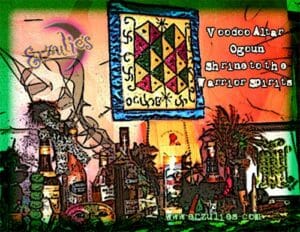
Voodoo Altar, Sacred Space and Voodoo Shrine the Warrior Spirit Ogoun. Ogoun is the protective warrior spirit in the Vodou religion, and one of the many Ogoun Voodoo Altars at Erzulie’s Voodoo in New Orleans.
To one side is placed a white candle, and on the other, a red or multicolored candle. Holy water taken from a Catholic Church, the perfumes Pompeii and Florida Water or Rev d’Or, frankincense, as well as fresh flowers completes the setup of a simple ogantwa.
There should always be a glass or bowl of fresh water on the ogantwa, and most devotees will place a kwakwa rattle or a bell here (or an ason, if they are priests) to use for calling their spirits. Other items that may be necessary include, a small brazier for burning incense or other items, a glass bowl for making lamps, a supply of white taper candles, cotton wicks, and olive oil.
♥ How to Baptize and Activate Your Vodou Altar
Voodoo Altar, Voodoo Shrine and Sacred Space for the Divine Water Spirit LaSiren. Papa Legba. Mambo LaSiren is the Voodoo Lwa of Spiritual Cleansing, Healing, Peace & Balance in Vodou religion, and a very honored Voodoo Lwa at Erzulie’s Voodoo in New Orleans.
The ogantwa must be baptized to its purpose before it is ready for use. Burn frankincense, recite three (3) Our Father’s, seven (7) Hail Mary’s, and if desired, other appropriate prayers. Next, sprinkle holy water from a Catholic church, baptizing the ogantwa in the name of the Father, Son, and Holy Spirit. The ogantwa is now ready to serve as a focal point for prayer and meditation.
Note: For those who are newly initiated, consult your elders. They should instruct you on the proper building of an ogantwa to your spirits in accord with your understanding and level of initiation. If necessary, they may even oversee the proper installation of an altar to the Lwa in your home. Follow their advice please. That is why they are there, and you did choose them after all… or did you?
Voodoo Altar and Voodoo Shrine to the Ghede and Baron Samedi, ruler of the Dead and Ancestral Spiritual at Erzulie’s Voodoo in New Orleans.
♥ Final Thoughts from Erzulie’s Voodoo New Orleans
We hope this guide empowers you to create a sacred space that honors your spirits, your ancestors, and your personal path. Whether you are a novice or an initiated practitioner, your sincerity, respect, and devotion are what give your altar its power.
We invite you to learn more this mystical and fascinating Voodoo religion, Roots of Vodou, Voodoo practitioner spiritual sessions and Haitian Vodou rituals by browsing our vast collection of Voodoo articles written by expert and initiated practitioners from all over the world!
We sincerely hope this overview on Vodou Altars, Voodoo Shrines and Sacred Spaces in the Voodoo assists anyone looking to create their personal Voodoo Altar or Shrine for both, the novice to the initiated Vodou practitioner.
Alafia from all of us at Erzulie’s Voodoo in the French Quarter of New Orleans.
Voodoo Queens and Root Doctors in New Orleans Voodoo ~ A Glimpse into the History of our legendary Voodoo Practitioners
Voodoo Queens and Root Doctors in the New Orleans Voodoo tradition. A fun and informative glimpse into the history of the more legendary Voodoo Queens and Root Doctors that formed the unique and magical New Orleans Voodoo practice. This sacred spiritual tradition is still heavily practiced today in both New Orleans and Louisiana. Note: the spelling of the word Voodoo in this section versus our articles on Haitian Vodou. This is to reflect the American influence on Voodoo as practiced in the new world.
This overview on the history of our Voodoo Queens and Root Doctors in New Orleans is not intended to provide the complete history of the development of the Voodoo tradition, as that would require volumes of information. Instead, we wanted to provide an educational overview on with the roots, myths, magic, and legendary practitioners who influenced the distinct New Orleans Voodoo tradition and formed our cultural heritage. Continue reading “Voodoo Queens and Root Doctors in New Orleans Voodoo”→