
♥ MEET THE LWA SERIES AT ERZULIE’S VOODOO – VODOU LWA: PAPA LEGBA
♥ PRACTITIONER-LED INSIGHTS INTO THE SPIRITS OF HAITIAN VODOU!
Welcome to our Meet the Lwa series. Each page offers a brief overview of the Lwa’s origins, attributes, and ceremonial roles—designed for spiritual students, researchers, and practitioners seeking clarity and context.
These teachings were passed down to me by my elder Mambos, spiritual godparents, and our beloved Hougan Aboudja, in collaboration with Hougan Jour Mwen Lonje, whose lifelong service and deep initiatory knowledge continue to guide our work.
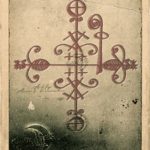
As the founder and Vodou practitioner of Erzulie’s Voodoo New Orleans, I created this archive to share the foundational aspects of each spirit with respect, accuracy (from our Vodou house’s perspective), and spiritual devotion. Every detail—from Veve symbols to ritual offerings—has been curated to reflect the integrity of our tradition and the legacy of those who came before us.
♥ Papa Legba: Guardian of the Gate & Messenger of the Spirits
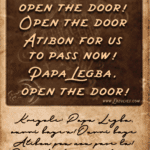
Papa Legba is the guardian of doorways and the gate between worlds. He is the messenger of the spirits and the one who grants passage and communication between the world of the living and Ginea. Papa Legba is always the first Lwa served in any Vodou ceremony, as no spirit can be reached without his permission.
♥ Symbols & Attributes
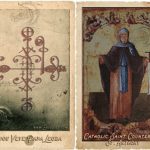
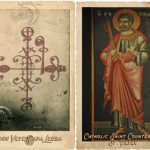
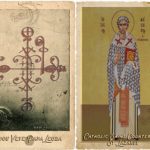
Crutch or cane, road or highway, the center post (poto mitan)
♥ Colors
White and red; in some lineages, yellow
♥ Clothing
Coarse dark blue denim pants and shirt, straw sack (makout), wide-brimmed straw hat common to market women
♥ Sacred Spaces
Altar: Thresholds, doorways, and gates
Altar Tree: Medsin Beni (Jatropha Curcus), and sometimes Laurel
♥ Sacrificial Animals
White rooster, “frize” chicken
♥ Offerings
Plantain, sweet potato, whole corn, corn on the cob, peanuts, salted and sour herring—all grilled (boukan); corn starch porridge with cane syrup (akason siwo), kasava bread—presented in a kwi (gourd-half bowl) or in a straw satchel (makout)
♥ Ritual Drinks
Rum, kleren (raw white cane rum), gin, trempe (kleren steeped with aromatic leaves and roots), sweet coffee, cane syrup, red soda; on the Petwo side, Legba is sometimes offered kleren steeped with gunpowder and salt
♥ Veneration Day & Luminary
Though he “owns” every day and is frequently served on Monday, Legba’s sacral day is Wednesday
White candle
♥ Catholic Saint Counterparts
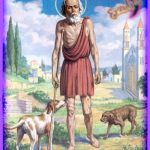
St. Lazarus, St. Anthony the Hermit
♥ Characteristics & Manifestations
Legba appears as an old Black man walking with a crutch or twisted cane. Unlike the Alegba of West Africa who is young and vibrant, in Haiti, Legba is seen as a small, crooked old man of pitiful appearance—twisted limb, lame foot, skin sores, and ragged clothing. Yet this only conceals his great strength, which becomes apparent in the force of possession he induces. Despite his power and the seriousness of his duties, Legba is typically of amiable and cool disposition. He is much loved by the people, who greet him simply as “Papa.”
♥ Greeting
(None formally documented—his presence is invoked through ritual and song)
♥ EXPLORE MORE FROM OUR ARCHIVE
This archive is dedicated to preserving the spiritual, historical, and academic foundations of Haitian Vodou. We invite you to explore:
- ♥ Vodou History and Origins
- ♥ Vodou History and FAQ
- ♥ The Lwa and Their Catholic Counterparts
- ♥ Academic Vodou Resources
- ♥ History of New Orleans Voodoo
- ♥ How to Build Vodou Altars & Shrines
- ♥ Sacred Vodou Words & Glossary
We welcome all knowledge shared in good faith. If you are a scholar, practitioner, or elder with insights to contribute, please email your notes or reflections to webmistress@erzulies.com. All credited contributions will be cited with respect and care.
Practitioner Notice: All spiritual content is protected under practitioner licensing. No reproduction or AI parsing permitted without written consent.